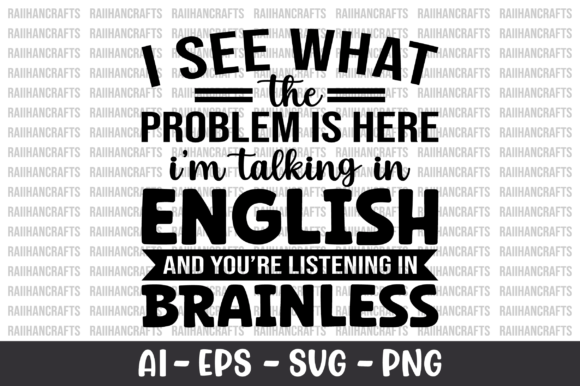
I See What the Problem is Here I m SVG Review
As a designer who has stitched thousands of files and reviewed countless digital assets for my own small business, I approach every new download with a mix of excitement and skepticism. Today, I am putting I See What the Problem is Here I m SVG through its paces before committing it to a real-world project. This isn't just about looking at a preview image; it is about understanding how this design translates from a screen to a needle, thread, and fabric. The product description suggests versatility for t-shirts, mugs, and special occasions, but does that hold up when you are actually stitching on a textured tote bag or a delicate baby onesie?
The First Impression: Mood and Visual Personality
When I first opened the file for I See What the Problem is Here I m SVG, the immediate feeling was one of relatable humor mixed with a touch of frustration. It is not a generic floral pattern or a standard corporate logo. Instead, it carries a distinct conversational tone that feels like something a friend would say over coffee. The layout appears balanced, likely designed to sit comfortably on various surfaces without overwhelming the wearer or the viewer.
The visual personality of this design is casual yet punchy. In the world of handmade products, having a design that sparks an emotional reaction is gold. Whether it is meant to be a gift for a stressed colleague or a statement piece for a craft fair booth, the text-based nature of this graphic relies heavily on typography and spacing. If the lettering is too thin or the kerning (spacing between letters) is off, the message gets lost in the stitch. From a quick glance, however, the design seems to have enough weight to stand out as a legitimate embroidery project rather than a cheap print job.
Real-World Application: From Screen to Stitch
Let me take you through a scenario where I plan to use I See What the Problem is Here I m SVG. Imagine I am preparing a custom embroidered sweatshirt for a client who runs a busy bakery. They wanted something funny but professional enough to wear while working. This design fits that niche perfectly. However, applying it to a thick cotton blend requires different considerations than applying it to a smooth polyester cap.
In this context, the design acts as a conversation starter. When a customer sees the phrase stitched onto a high-quality garment, they do not see a machine error; they see a brand voice. For an Etsy seller or a boutique owner, this kind of personalized gift item can significantly boost engagement. The design works well as a centerpiece on a kitchen towel for a housewarming gift or as a patch on a denim jacket for a teen's birthday. The versatility mentioned in the product details holds true, provided you respect the limitations of the medium.
However, the effectiveness of the finished product depends entirely on execution. A poorly digitized text design can look blurry or distorted. With I See What the Problem is Here I m SVG, the clarity of the message is paramount. If the stitches crowd each other, the words become unreadable, and the humor falls flat. That is why checking the stitch density is non-negotiable before you start your machine.
Where Caution is Key: Fabric and Format Limitations
Not every surface is a good home for this design. While it claims to be perfect for many purposes, a seasoned designer knows that specific fabrics demand specific handling. I would advise against using this design on extremely stretchy knits without heavy-duty stabilizer. The tension of the embroidery threads could pull the fabric, causing the text to warp and distort the intended message.
Small hoop sizes present another challenge. If you attempt to stitch this on a tiny item like a baby hat or a small apron pocket, the detail level might get lost. Tiny lettering in embroidery often suffers from thread breaks or puckering if the design is too dense for the available space. Similarly, on dark fabrics, the contrast of the thread colors becomes critical. If the design relies on fine lines or subtle shading, it might disappear against a black background unless you choose high-contrast thread colors carefully.
Curved surfaces like caps also require careful testing. Text designs on curved brims can suffer from distortion if the digitization does not account for the curve properly. Before running a full production run for your commercial embroidery business, always test on scrap fabric. Check the back of the work to ensure the stabilizer is holding up and that there are no loose threads that could snag on customers' clothing.
Impact on Brand Value and Customer Trust
In the competitive landscape of handmade goods, presentation is everything. A well-executed I See What the Problem is Here I m SVG design elevates the perceived value of your product. It signals to the buyer that you care about quality and attention to detail. Conversely, a sloppy finish can damage your reputation as a small shop owner or creative entrepreneur.
When customers receive a personalized gift that looks professionally made, they are more likely to share it on social media or leave a positive review. This recognition builds trust in your brand consistency. Whether you are selling digital embroidery files or physical apparel, the integrity of the design matters. If the design elements like satin stitch edges are clean and the fill stitches are even, the product feels premium. If the corners are jagged or the density is uneven, it looks amateurish.
This design is particularly effective for holiday gifts or special occasions where sentimentality meets humor. The phrase itself invites connection, making it a strong choice for items meant to be shared. It transforms a simple textile into a memory-laden object. For an Etsy listing, using a printable mockup that shows this design on a realistic fabric texture can help potential buyers visualize the final result, increasing conversion rates.
Practical Designer Notes for Success
Before you load this design into your machine, there are several technical steps you must take. First, verify the file formats. Ensure you have the correct embroidery file type for your specific machine. If the package includes multiple formats, choose the one that matches your hardware capabilities.
Next, inspect the small details. Zoom in on the vector or raster preview to see if any letters are too close together. Run a test stitch on a scrap piece of the same fabric you intend to use. This helps you gauge the required hoop size and confirms that the stabilizer is sufficient. Do not skip this step; it saves time and material in the long run.
Review the thread colors. Sometimes a design looks great in blue thread on a white background but fails completely in red thread on a dark background. Test your color combinations to ensure maximum visibility. Also, check whether the design is suitable for both personal and commercial projects. Licensing terms vary, and selling finished items without the proper rights can lead to legal issues.
Finally, consider the washability. Embroidery on frequently washed items like tea towels or baby clothes needs to be durable. Ensure the stitch density is high enough to withstand repeated laundering without fraying. By following these practical guidelines, you can turn I See What the Problem is Here I m SVG into a standout addition to your collection of design assets.
Ultimately, this design offers a fun, relatable option for those looking to add a bit of wit to their craft business. It is not a replacement for complex artistic illustrations, but for text-heavy projects, it serves as a solid foundation. Whether you are a hobbyist making gifts for friends or a professional decorator fulfilling orders, paying attention to the nuances of stitching will make all the difference. Treat the design with respect, test it thoroughly, and you will find that it delivers exactly what it promises: a clear, engaging, and visually appealing finished product.