I Try Not to Laugh at My Own Jokes SVG Q Review
As a designer who has spent years testing digital assets for real-world embroidery projects, I often find myself filtering out the flashy promises and looking for what actually works on the hoop. When I Try Not to Laugh at My Own Jokes SVG Q landed in my review pile, it wasn't just another generic graphic; it felt like a design with a specific personality ready to be stitched into existence. The core appeal here is its humor, but the real question for any serious crafter or small business owner is whether that humor translates well from a screen to fabric.
The First Stitch: Visual Personality and Mood
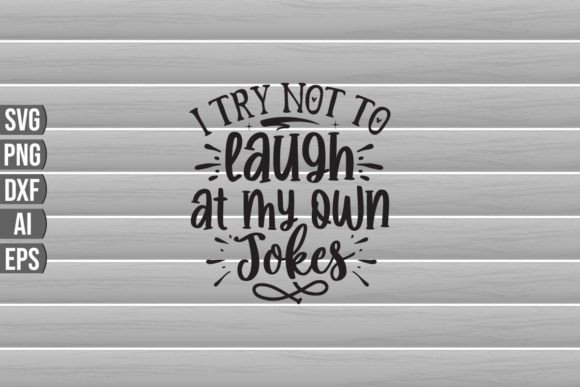
The immediate impression of I Try Not to Laugh at My Own Jokes SVG Q is one of approachable wit. In the world of handmade goods, designs that convey a sense of fun often perform better than those that are purely decorative. This piece carries a conversational tone that suggests it belongs on items people wear daily or use in casual settings. It feels less like a formal logo and more like a statement piece intended to spark a smile.
For an embroidery project, the layout needs to balance readability with stitch density. If the text is too tight, the machine might struggle to render the curves without piling up thread. If it is too loose, the message loses impact. From a design judgment perspective, this file appears to have the right amount of breathing room, making it suitable for various applications where the wearer wants to share a bit of their personality. It fits naturally into the Crafts and Graphics categories not just because of its format, but because of its utility as a conversation starter.
Real-World Application: A Case Study in Custom Apparel
To truly understand how I Try Not to Laugh at My Own Jokes SVG Q performs, imagine you are preparing a custom embroidered tote bag for a local craft fair. You want something that stands out on a rack full of floral patterns and minimalist quotes. You decide to use this design on a sturdy canvas tote. The contrast between the bold text and the textured fabric creates an instant visual hook.
In this scenario, the design shines because it pairs well with everyday items. Think about a sweatshirt embroidery project for a holiday gift. The humor resonates perfectly during family gatherings or office parties. Or consider a baby item, like a onesie or a blanket. Parents often appreciate designs that acknowledge the chaos of parenting with a touch of self-deprecating humor. The versatility of I Try Not to Laugh at My Own Jokes SVG Q allows it to transition seamlessly from a boutique product to a personalized gift.
However, the success of the finished product depends heavily on execution. If you are selling these items as part of your craft business, the quality of the stitch matters as much as the joke itself. Customers trust a brand when the stitching is clean, the edges are defined, and the thread colors pop against the background. A poorly executed digitized version of a funny quote can ruin the mood, turning a cute idea into a sloppy mess. That is why reviewing the file structure before starting is crucial.
Navigating Technical Challenges and Fabric Choices
While the concept is solid, every machine embroidery design has its limitations. One area to exercise caution is with small hoop sizes. If you attempt to stitch this design onto a very small patch or a narrow cap brim, the lettering might become cramped. The curve of a hat can also distort straight lines if the design isn't properly adjusted for the curvature. For curved surfaces like caps, you must ensure the design accounts for the stretch and shape of the material.
Fabric texture plays a massive role in how the final embroidery file looks. On smooth, tightly woven fabrics, the details will appear crisp. However, on thick, textured materials like heavy denim or fleece, some of the finer details might get lost under the bulk of the thread. Additionally, thin or stretchy fabrics require extra attention to stabilizer selection. Without proper support, the tension could pull the fabric, causing the design to pucker and lose its intended shape.
Dense stitch areas are another consideration. If the design relies heavily on fill stitches, running them too fast or with too many layers can cause the needle to break or the thread to snap. It is always wise to test the design on scrap fabric first. This step allows you to check thread color contrast and confirm the hoop size before committing to a customer's garment. Dark fabrics present their own challenge; you need to ensure the thread choice provides enough contrast so the joke remains readable even in low light.
Maximizing Value and Professionalism
When you use a high-quality design like I Try Not to Laugh at My Own Jokes SVG Q, you are investing in the perceived value of your product. A professionally stitched item signals to the buyer that care was taken. This builds trust and encourages repeat purchases. Whether you are an Etsy seller looking to boost your listings or a creative entrepreneur building a brand, consistency in quality is key.
The inclusion of multiple file formats, such as Ai, EPS, SVG, DXF, PNG, and JPG, adds significant flexibility to your workflow. Having a 300 dpi high-resolution PNG allows you to create stunning printable mockups for your online store, giving customers a clear preview of the finished product. The ability to change colors means you can offer customization options, which is a huge plus for personalized gifts. If a customer wants a red shirt with white text or a navy apron with gold stitching, having a fully editable design saves time and increases your sales potential.
Practical Designer Notes for Success
Before you hit the "start" button on your machine, there are several steps to ensure your project goes smoothly. First, inspect the small details. Zoom in on the vector paths to see if any corners are sharp or if any letters are touching inappropriately. Second, compare light and dark fabric backgrounds using your mockup tools to verify legibility. Third, use the correct stabilizer for the fabric type; cut-away stabilizers are generally best for stretchy knits, while tear-away works well for stable wovens.
Always check the licensing terms before selling finished items or digital products. Some files are for personal use only, while others allow commercial application. Confirming this upfront prevents legal issues down the line. Finally, don't skip the black and white mockup test. Sometimes, color distractions hide structural flaws in the design. Seeing the design in monochrome helps you judge the balance and flow of the stitches objectively.
Ultimately, I Try Not to Laugh at My Own Jokes SVG Q offers a blend of humor and practicality that makes it a strong candidate for a wide range of embroidery projects. From kitchen towels and pillow covers to boutique branding and holiday gifts, its adaptability is its greatest strength. By approaching the design with a critical eye and following standard best practices for stabilization and stitching, you can turn this digital asset into a tangible, profitable, and delightful handmade product. The goal is to create something that not only looks good but tells a story, and with the right execution, this design does exactly that.